Futures Incubator
Experimenting with VR, AI & data tools for speculative prototyping

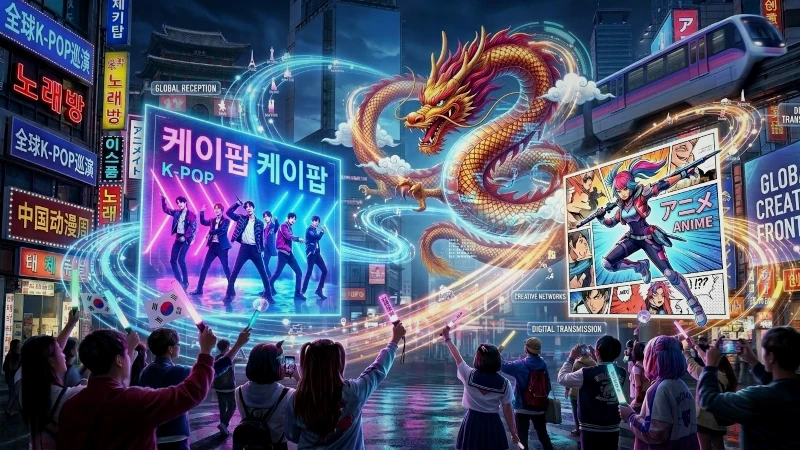
Asia no longer simply participates in the global creative economy; it is actively reconstituting its architecture. We are witnessing a multipolar realignment of cultural power: ancient Chinese motifs are reinvented through diasporic design; K-pop melodies transcend linguistic and faith-based borders; and massive anime databases reveal the logic of multi-billion-dollar transmedia ecosystems.
This new cartography of Asian cultural flows is simultaneously generative, commercial, and contested. While these flows yield immense soft power, they also generate significant friction. The rise of anti-Hallyu clusters in Southeast Asia signals emerging geopolitical resistance, while the race to preserve intangible heritage faces the dual threats of algorithmic erasure and cultural homogenization. Even as Japanese anime achieves unprecedented global reach, it confronts an existential crisis: generative AI tools that extend creative possibility while simultaneously threatening the labor regimes and hand-drawn aesthetics that define the medium. To navigate this volatile terrain, intuition is insufficient. We require systematic, speculative, and methodologically rigorous foresight.
The Culture Futures Lab Incubator: "Hacking the Asian Waves" serves as the mission control for this endeavor. Moving beyond passive theoretical discourse, this immersive laboratory focuses on the engineering of cultural transmission. Participants will engage in speculative prototyping, deploying emergent technologies—including VR environments and predictive analytics—not as replacements for tradition, but as instruments to model, stress-test, and refine resilient strategies. Our goal is to ensure a future where Asian cultural forms do not merely circulate under the weight of global algorithms, but actively shape the global creative frontier.
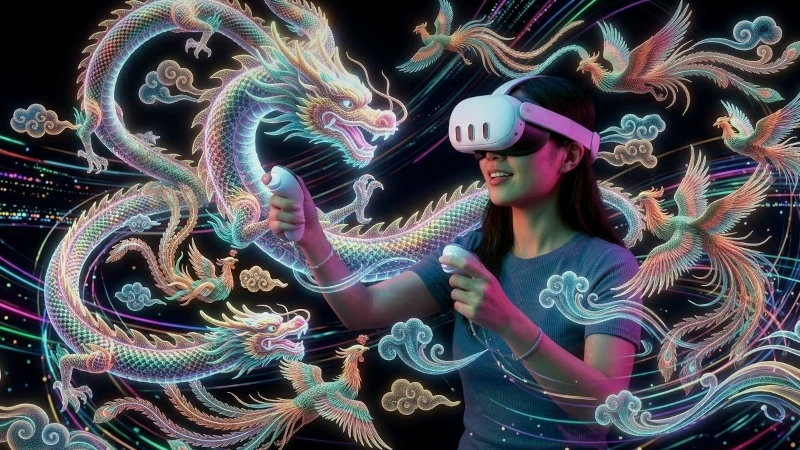
The dragon never stayed home. Neither did the phoenix, the lotus, nor the cloud scroll. Across maritime Asia, these Chinese visual symbols migrated through trade winds, marriage networks, and colonial encounters—transforming as they traveled. Today, a phoenix rendered in Peranakan beadwork or a dragon carved into a Malay keris hilt no longer belongs solely to "Chinese" heritage. Yet our archival logics persist in trapping these traveling motifs within ethnic silos, rendering invisible the hybrid narratives they now embody. This VR Sprint invites participants to become co-authors of traveling symbols, reinterpreting ancient Chinese motifs through the lens of their own cultural experiences. Using Virtual Reality as a platform for participatory remediation, the sprint enables diverse communities to encounter Chinese motifs through distinct aesthetic vocabularies. Through hands-on VR prototyping, participants will craft immersive narratives that weave Chinese symbols into their own cultural stories, transforming historical legacies from frozen archives into dynamic, shared resources.
The Sprint will raise the following questions:
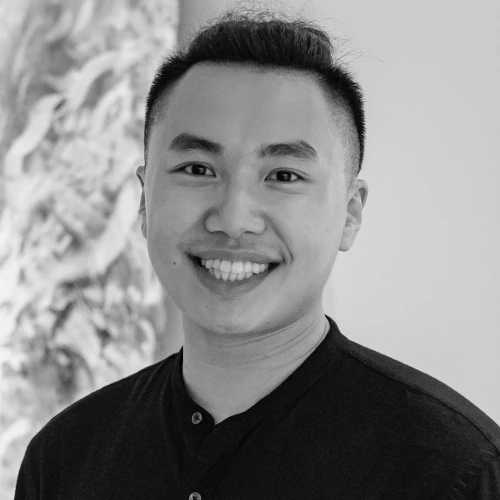
Benedict Yu is a Visceral Reality Artist, mixed reality educator, and affective reality researcher working at the intersection of art, technology, and spirituality. Based between Singapore, Taiwan, and the EU, he creates virtual sanctuaries and immersive spaces designed to foster communal healing and self-reflection, particularly for unseen and marginalized communities worldwide. Yu's artworks and projects are held in major collections such as Apple Developer Centre, Mapletree Investments Singapore, Mediacorp Singapore, the Courtois Collection (Paris), and GAW Capital (Hong Kong). His projects have been presented at renowned institutions and venues, including the New Arts Museum Singapore, Asian Civilisation Museum, SomoS Berlin, Zwölf Apostel Kirche Berlin, the Courtois Collection Paris, Marina Bay Sands, Gardens by the Bay, the National Museum of Singapore, the National Design Centre, Gillman Barracks, Gajah Gallery, and Fondazione Opera Campana dei Caduti.

Dr Amber Chunzhi Yin is an interdisciplinary researcher and culture entrepreneur working at the intersection of cultural studies, digital humanities, and heritage preservation. She holds a PhD in Cultural Studies & Digital Humanities from Nanyang Technological University, and has a background in fine art. Her research focuses on cultural analysis, ethical approaches to generative AI in heritage contexts, and cross-cultural perspectives on cultural interpretation. Dr Yin has contributed to scholarly and applied work on responsible digital heritage practice, with a focus on developing rigorous, ethics-informed approaches for using AI and other computational methods in cultural contexts. Her publications and ongoing projects examine how cultural meaning is represented, transformed, and safeguarded when heritage is digitised, reconstructed, or interpreted through AI systems.
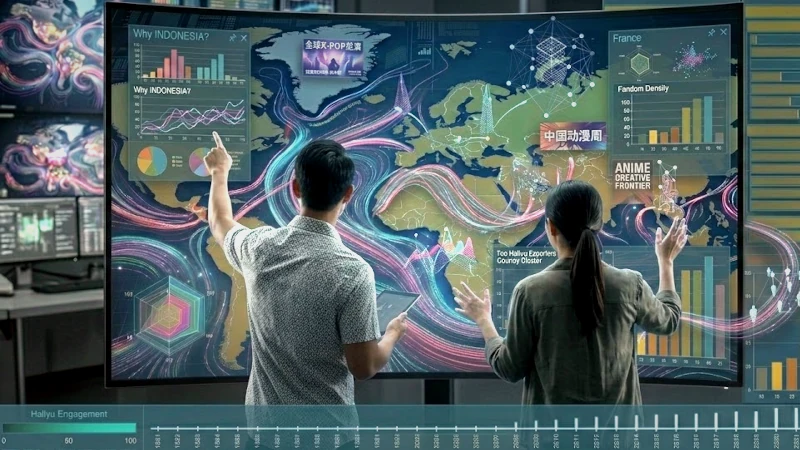
The Korean Wave does not travel through empty space. It moves through communities with existing histories, religious commitments, and postcolonial sensibilities—and sometimes, it meets resistance. Yet even as anti-Hallyu sentiment surges in some nations, fandoms in neighboring countries grow louder. The question is no longer whether Hallyu flows, but why it flows so differently across communities—and whether the rising counter-flows signal an impending crash or simply the natural friction of deep cultural engagement. This sprint places participants inside the currents of cultural transmission. Working with the Hallyu Tracker data, audiences will explore how clusters of countries—sometimes unbounded by geography or historical ties—respond similarly to Korean cultural exports. Why does Indonesia embrace Hallyu as a "K-Tsunami" while simultaneously generating sustained critiques of cultural invasion? What patterns emerge when we map pro- and anti-Hallyu movements rising in unison across seemingly disconnected territories? Through hands-on engagement with the Hallyu Tracker, participants will visualize the complex topographies of cultural reception—not to predict waves with algorithmic certainty, but to understand the deep structures that shape when and where they break.
The Sprint will raise the following questions:

Dr Natalia Grincheva is a leading Digital Humanities scholar and practitioner who specializes in data-driven cultural policy and diplomacy. Her work actively shapes the emerging field of digital statecraft, bridging the gap between cultural insight and data-driven governance. Her career spans from foundational work on the UNESCO's 2005 Convention to pioneering the Data To Power platform, developed for academic inductive research to facilitate the exploration of complex global phenomena through data visualization, mapping, and interactive data storytelling. She is the author of three monographs Geopolitics of Digital Heritage (Cambridge University Press: 2024), Museum Diplomacy in the Digital Age (Routledge: 2020) and Global Trends in Museum Diplomacy (Routledge: 2019). Now she is working on a new monograph, Digital Soft Power of Heritage Media, forthcoming with Cambridge University Press.
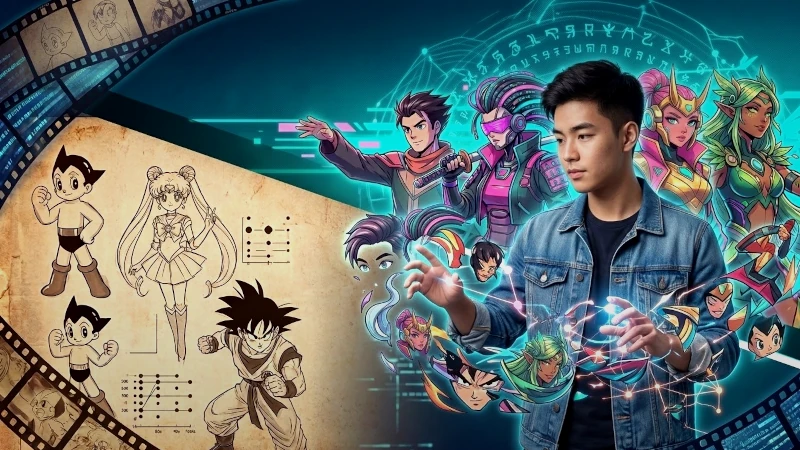
Japanese anime has never been a static medium. From the astrogirls of the 1960s to the isekai anti-heroes of today, its character archetypes evolve in conversation with shifting social anxieties, technological imaginaries, and global audiences. Yet the patterns that govern this evolution remain largely invisible—buried within a vast, underexplored archive of thousands of characters, their visual traits, and their narrative worlds. What if we could surface those patterns? And what might they tell us about where anime is headed next? This sprint places participants inside the largest Anime Characters Database — Japanese Visual Media Graph, a comprehensive repository documenting thousands of characters across anime, manga, and video games. Unlike conventional archives organized by genre or popularity, this database is designed to explore physical characteristics: eye color, hair length, age, and visual archetypes. It is, in effect, a grammar of character design waiting to be read. Participants will mine this dataset to identify historical patterns, trace the emergence and decline of character typologies, and model speculative futures for Japanese visual media. Through hands-on engagement with the database, you will not merely analyze what anime has been, but actively reimagine what it could become—proposing new character archetypes, narrative possibilities, and visual grammars for the next generation of global audiences.
The Sprint will raise the following questions:
